News

Paper Marbling Workshop + Introduction to Ebru

September 26, 2024

Last month, artist Shaheen Rahman led two Turkish paper marbling, or ebru, workshops at HCCC, teaching participants how to create one-of-a-kind works of art on paper! Read on to learn about the history of ebru, an artform officially recognized in 2014 by UNESCO as a unique expression of world cultural heritage!
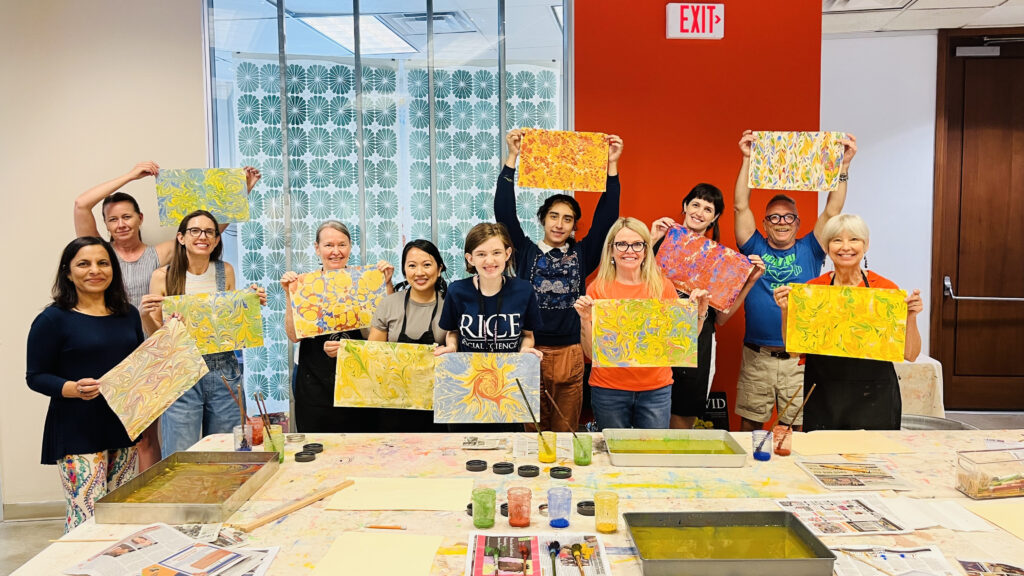
Photo by Kerrisa Treanor

The earliest surviving examples of paper marbling come from 12th century Japan, where it is known as suminagashi. In the Islamic world, the technique is said to have originated in Bukhara, Uzbekistan, traveling west along the Silk Road – a trade route that linked east and west for almost two millennia – to Turkey, where in the 15th and 16th centuries it quickly became beloved in the Ottoman Empire.
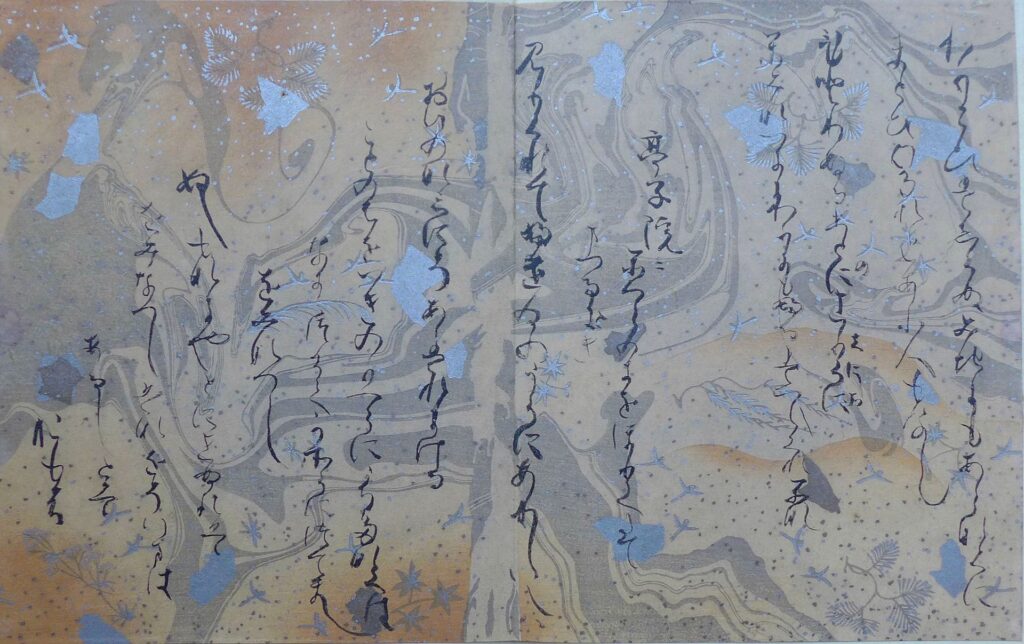
12th c. suminagashi pages with poems by Ōshikōchi Mitsune. From Wikimedia commons.

Every work of ebru begins with a tray of water, thickened with oil or a seaweed-based powder called carrageenan. Then, using a horsehair brush, needle, or comb, pigments are dripped or flicked onto the surface of the water. Pigments like white lead, gold, indigo, ochre, and acrylic are mixed with oxgall acid, which increases their surface tension and allows them to float on the surface of the water.
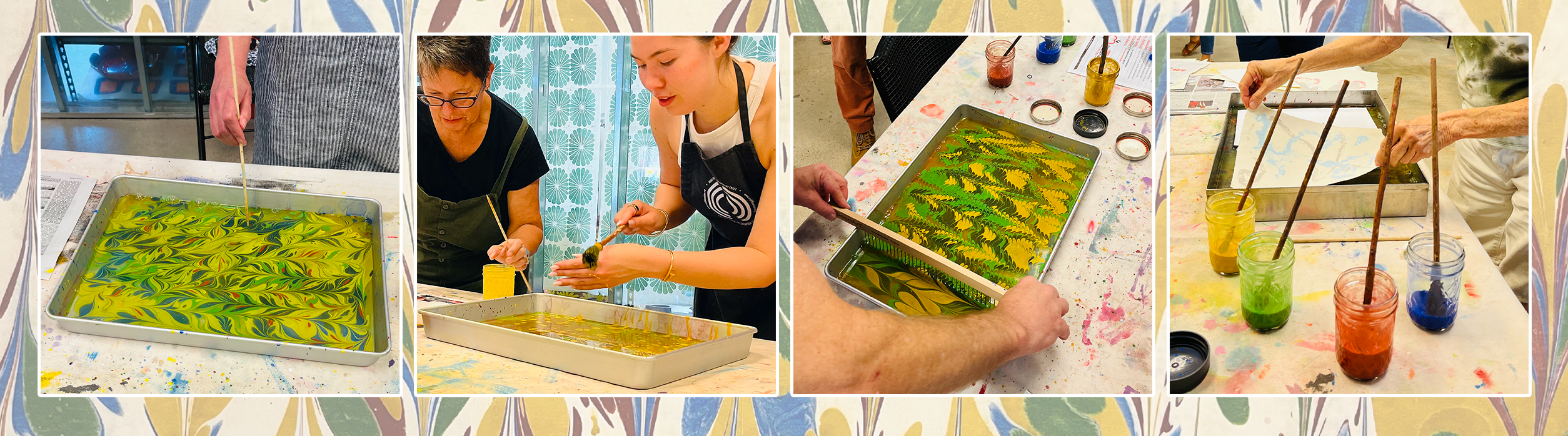
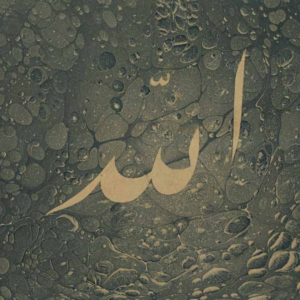
Photos by Kerrisa Treanor
Detail, lafza-i-Celâl ebru by Necmeddin Okyay. From Atatürk Cultural Center exhibition catalog by Alparslan Babaoğlu.

The pigment-laden water is then manipulated with the artist’s tools, allowing colors to flow together and form unique designs. Once the tray is ready, a piece of paper is carefully laid on the water, and the design is transferred onto the sheet.

The fluidity of ebru lends itself to abstract patterns and designs, but floral and geometric motifs are also popular. Expert ebru artists are also able to create works of marbled calligraphy, known as Yazili ebru, by applying a gum arabic resist to the paper before dyeing – a technique pioneered by celebrated calligrapher Necmeddin Okyay, who also developed the distinctive tulip design seen in many works of ebru today.

You can see more photos from our August 24, 2024 Paper-Marbling Workshop on our Facebook page!
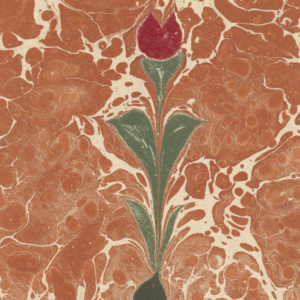
 

Detail, tulip motif ebru by Necmeddin Okyay. From Lale Magazine, Jul-Sept. 2020 issue

More News

June 26, 2025

Innovative Houston Creators Are Crafting a Legacy By Lani McHenry

May 6, 2025

Erika Diamond explores the fragility and resilience of the human body using materials that echo the properties of skin. Born to ballet dancers, Diamond creates

April 27, 2025

Houston Center for Contemporary Craft Becomes a Hub For Artists By Alison Medley The ethereal world of contemporary craft is a distinctly tactile one, with

April 22, 2025

An exhibit of Sonya Clark’s exhibition at HCCC by Robert Boyd.

April 8, 2025

The Houston Center for Contemporary Craft (HCCC) will honor Erick and Mara Calderon at the 2025 Crafting a Legacy Spring Luncheon on May 1st at

March 6, 2025

Houston Center for Contemporary Craft (HCCC) and the Houston Museum of African American Culture (HMAAC) are pleased to co-present “Sonya Clark: We Are Each Other,”

4848 Main Street, Houston, TX 77002

Houston Center for Contemporary Craft is located in the Houston Museum District, two blocks south of Highway 59, near Rosedale St. Visitors should park in the free parking lot located directly behind the building, off Rosedale and Travis Streets, and enter through the back entrance. 

Free Admission

OPEN TUESDAY – SATURDAY, 10 AM – 5 PM

4848 Main Street, Houston, TX 77002

Houston Center for Contemporary Craft is located in the Houston Museum District, two blocks south of Highway 59, near Rosedale St. Visitors should park in the free parking lot located directly behind the building, off Rosedale and Travis Streets, and enter through the back entrance. 

Free Admission

OPEN TUESDAY – SATURDAY, 10 AM – 5 PM